
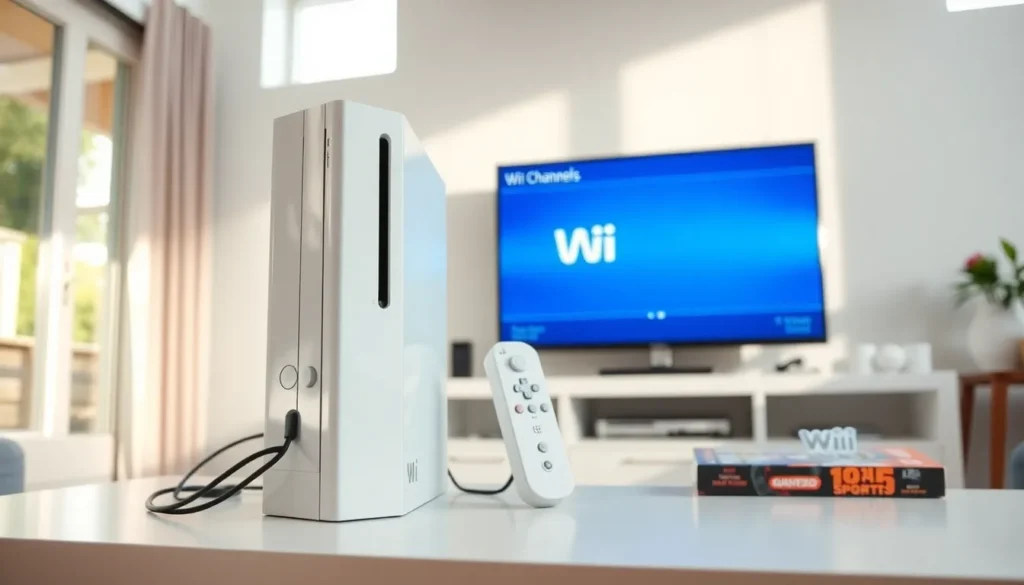
The Nintendo Wii changed how people play video games. Released in 2006, the Nintendo Wii introduced motion controls to mainstream gaming and brought families together in living rooms around the world. But what is Nintendo Wii exactly, and why did it become such a phenomenon?
This guide covers everything about the Nintendo Wii, from its origins and groundbreaking features to its lasting impact on gaming culture. Whether someone remembers playing Wii Sports with grandparents or is just learning about this iconic console, this article explains why the Wii remains one of the most important gaming systems ever made.
Table of Contents
ToggleKey Takeaways
- The Nintendo Wii is a home video game console released in 2006 that revolutionized gaming with motion-control technology.
- The Wii Remote (Wiimote) allowed players to physically swing, point, and tilt the controller, making gaming accessible to all ages and skill levels.
- Nintendo Wii sold over 101 million units worldwide, outselling competitors like the PlayStation 3 and Xbox 360 despite having weaker hardware.
- Iconic games like Wii Sports and Wii Fit turned the console into a cultural phenomenon used in homes, hospitals, and retirement communities.
- The Nintendo Wii expanded the gaming audience by attracting families, older adults, and non-gamers who had never played video games before.
- The Wii’s legacy of innovative, accessible gaming continues to influence Nintendo products like the Nintendo Switch today.
The History and Launch of the Nintendo Wii
Nintendo developed the Wii under the codename “Revolution.” The company wanted to create something different from competitors like Sony’s PlayStation 3 and Microsoft’s Xbox 360. While those consoles focused on powerful graphics, Nintendo bet on a new way to interact with games.
The Nintendo Wii launched on November 19, 2006, in North America. It hit stores in Japan on December 2 and reached Europe on December 8 that same year. The launch price was $249.99 in the United States, significantly cheaper than the PS3’s $499 starting price.
Demand for the Nintendo Wii was immediate and intense. Stores sold out within hours. For months after launch, finding a Wii required luck, patience, or a willingness to wait in long lines. Some retailers held lotteries just to distribute their limited stock fairly.
By the end of 2006, Nintendo had sold over 3.19 million Wii units. The console continued its strong sales throughout its lifespan. By the time Nintendo discontinued the Wii in 2013, it had sold over 101 million units worldwide. This made the Nintendo Wii one of the best-selling home consoles in history.
Key Features and Innovations
The Nintendo Wii stood out because of its unique features. The console itself was compact and stylish, about the size of three DVD cases stacked together. It came in white initially, though Nintendo later released black and other color options.
The Wii included backward compatibility with Nintendo GameCube games. Players could insert GameCube discs and use GameCube controllers. This feature gave the system an instant library of classics.
Nintendo also introduced the Wii Channels system. The home menu displayed applications as TV-style channels. Users could check weather, browse photos, shop for classic games, and send messages to friends. The Mii Channel let players create cartoon avatars that appeared in compatible games.
The Virtual Console service deserves special mention. It allowed players to purchase and download classic Nintendo games from the NES, SNES, N64, and other systems. For the first time, fans could legally play retro favorites on a modern console.
Motion Control Technology
The Wii Remote, nicknamed the “Wiimote”, was the Nintendo Wii’s defining innovation. This wireless controller resembled a TV remote and contained accelerometers and infrared sensors. It detected movement and position in three-dimensional space.
Players swung the Wii Remote to swing a tennis racket. They twisted it to steer a car. They pointed it at the screen to aim and shoot. This intuitive control scheme made the Nintendo Wii accessible to people who had never touched a video game controller.
The Nunchuk accessory attached to the Wii Remote and added an analog stick plus additional motion sensing. Many games used this combination for movement and action controls. Later, Nintendo released the Wii MotionPlus adapter, which improved motion detection accuracy.
This motion control approach influenced the entire industry. Sony developed the PlayStation Move. Microsoft created the Kinect. The Nintendo Wii proved that innovative controls could outsell raw graphical power.
Popular Games and Entertainment Options
The Nintendo Wii had an impressive game library. Wii Sports came bundled with the console in most regions. It featured tennis, bowling, golf, boxing, and baseball mini-games. Wii Sports became a cultural phenomenon, hospitals used it for physical therapy, and retirement homes held tournaments.
Wii Fit introduced the Balance Board accessory and turned exercise into gaming. Players did yoga poses, strength training, and balance games while tracking their progress. It sold over 22 million copies worldwide.
Nintendo’s first-party titles delivered strong experiences. Super Mario Galaxy and its sequel received critical acclaim for creative level design. Mario Kart Wii became one of the best-selling racing games ever. The Legend of Zelda: Twilight Princess and Skyward Sword offered epic adventures.
Third-party developers also found success on the Nintendo Wii. Just Dance started its popular franchise on the platform. Resident Evil 4 received a well-regarded Wii port with motion controls. Rock Band and Guitar Hero brought music gaming to Wii owners.
Beyond games, the Nintendo Wii served as an entertainment hub. Netflix, Hulu, and Amazon Video apps arrived on the platform. The Wii could also play DVDs in certain regions with additional software. Many households kept their Wii connected primarily for streaming services.
The Wii’s Impact on Gaming Culture
The Nintendo Wii expanded who plays video games. Before the Wii, the gaming audience skewed young and male. The Wii attracted women, older adults, and families in unprecedented numbers. Grandparents bowled against grandchildren. Parents exercised with Wii Fit. Non-gamers became gamers.
This success proved that gaming didn’t need to chase hardcore audiences exclusively. The “casual gamer” became a recognized market segment. Mobile gaming later capitalized on this same audience.
The Nintendo Wii also demonstrated that innovation could beat specifications. The Wii had weaker hardware than its competitors. It couldn’t display HD graphics. Yet it outsold both the PlayStation 3 and Xbox 360. Creative thinking trumped processing power.
The console’s legacy extends to modern Nintendo products. The Nintendo Switch continues the philosophy of unique hardware experiences. Joy-Con controllers include motion sensors descended from the Wii Remote. Nintendo’s focus on accessible, family-friendly gaming traces directly to the Wii’s success.
Today, the Nintendo Wii remains relevant. Collectors seek out rare games. Modding communities keep the platform alive with new features. Many still consider Wii Sports the perfect party game. The console that seemed revolutionary in 2006 has become a beloved classic.


