
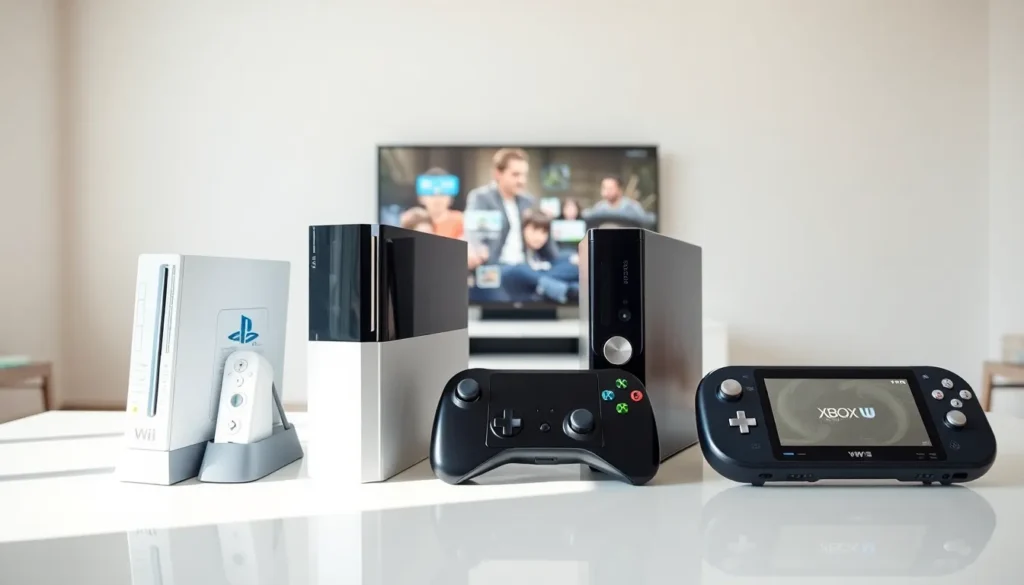
The Nintendo Wii changed home gaming when it launched in 2006. Its motion controls brought families and casual players into the console market. But how does the Nintendo Wii vs its competitors stack up today? This guide compares the Wii against the PlayStation 3, Xbox 360, and its successor, the Wii U. Gamers often debate which console delivered the best value, graphics, and game library. This comparison breaks down each matchup so readers can understand the strengths and weaknesses of each system.
Table of Contents
ToggleKey Takeaways
- The Nintendo Wii vs PlayStation 3 and Xbox 360 came down to motion controls and family appeal versus HD graphics and hardcore gaming experiences.
- Nintendo Wii sold over 101 million units, largely due to its $249 launch price—$250 cheaper than the PS3.
- The Wii Remote’s motion controls revolutionized gameplay and attracted millions of casual players who found traditional controllers intimidating.
- Nintendo Wii vs Wii U sales show a dramatic gap: 101 million units versus just 13.56 million, partly due to poor marketing of the successor.
- Each console served different audiences—choose the Wii for family gaming, PS3 for cinematic titles, Xbox 360 for online shooters, or Wii U for backward compatibility and off-TV play.
Nintendo Wii Vs. PlayStation 3
The Nintendo Wii vs PlayStation 3 debate defined the seventh console generation. These two systems targeted different audiences and delivered vastly different experiences.
Hardware and Graphics
The PlayStation 3 featured a powerful Cell processor and supported HD resolutions up to 1080p. The Nintendo Wii used hardware similar to its predecessor, the GameCube. It maxed out at 480p resolution. For players who wanted crisp visuals and cinematic games, the PS3 held a clear advantage.
The Wii prioritized accessibility over raw power. Its motion-sensing Wii Remote let players swing, point, and gesture their way through games. This approach attracted millions of non-gamers who found traditional controllers intimidating.
Game Library
Sony’s console excelled with exclusives like “Uncharted,” “The Last of Us,” and “God of War III.” These titles showcased impressive graphics and mature storytelling. Third-party developers also favored the PS3 for multiplatform releases.
Nintendo Wii vs PS3 game libraries tell different stories. The Wii dominated with “Wii Sports,” “Super Mario Galaxy,” and “The Legend of Zelda: Twilight Princess.” These games emphasized fun gameplay over visual fidelity. Party games and fitness titles like “Wii Fit” became household staples.
Price Point
The Wii launched at $249, while the PS3 started at $499 for the 20GB model. This $250 difference mattered to budget-conscious families. The Nintendo Wii vs PlayStation 3 price gap helped Nintendo sell over 101 million units worldwide.
Online Features
PlayStation Network offered free online multiplayer and a growing digital storefront. The Wii’s online capabilities felt limited by comparison. Its Virtual Console service let players download classic games, but the overall online experience lagged behind Sony’s offering.
Nintendo Wii Vs. Xbox 360
Microsoft’s Xbox 360 presented another strong competitor. The Nintendo Wii vs Xbox 360 comparison highlights the split between hardcore and casual gaming markets.
Performance Comparison
The Xbox 360 delivered HD graphics and smooth performance for demanding games. Titles like “Gears of War” and “Halo 3” showcased what the hardware could do. The Nintendo Wii couldn’t match this visual output. Its games looked dated next to 360 titles on HD televisions.
But, the Wii’s lower specs meant cheaper production costs. Nintendo sold each console at a profit from day one. Microsoft initially sold the 360 at a loss to gain market share.
Controller Innovation
The Wii Remote changed how people interacted with games. Players bowled, swung tennis rackets, and boxed using physical motions. Microsoft responded years later with Kinect, a camera-based motion system.
The Xbox 360 controller remained the standard for traditional gamers. Its ergonomic design and responsive buttons suited shooters and action games perfectly. The Nintendo Wii vs Xbox 360 controller debate came down to preference: innovation versus precision.
Exclusive Titles
Xbox 360 owners enjoyed “Halo,” “Forza Motorsport,” and “Gears of War.” These franchises built loyal fanbases. Nintendo countered with Mario, Zelda, and Metroid. Each company served its core audience well.
The Wii attracted third-party shovelware, cheaply made games designed to capitalize on motion controls. Quality control became an issue. The Xbox 360 maintained higher standards for most releases.
Reliability
The Xbox 360 suffered from the infamous “Red Ring of Death” hardware failure. Early models failed at alarming rates. The Nintendo Wii proved far more reliable. This durability factor influenced many purchasing decisions.
Nintendo Wii Vs. Wii U
Nintendo’s own successor created an interesting comparison. The Nintendo Wii vs Wii U matchup shows how the company evolved its approach.
Hardware Upgrades
The Wii U launched in 2012 with HD graphics support. It finally brought Nintendo into the high-definition era. The GamePad controller featured a built-in touchscreen that enabled off-TV play. Players could continue gaming even when someone else used the television.
The original Wii lacked these modern features. Its standard-definition output looked increasingly outdated as HD televisions became common.
Backward Compatibility
The Wii U played Wii games and supported Wii controllers. This backward compatibility added value for existing Wii owners. They could upgrade without abandoning their game libraries.
Commercial Performance
The Nintendo Wii vs Wii U sales numbers tell a stark story. The Wii sold over 101 million units. The Wii U managed only 13.56 million before discontinuation. Poor marketing confused consumers about whether the Wii U was a new console or an accessory.
Game Quality
The Wii U hosted excellent games like “Super Mario 3D World,” “Splatoon,” and “Mario Kart 8.” But, its smaller install base discouraged third-party support. The original Wii, even though its weaker hardware, attracted more developers during its prime years.
Which Console Is Right For You
Choosing between these consoles depends on individual priorities. The Nintendo Wii vs other systems comparison reveals clear use cases.
Choose the Nintendo Wii if:
- Family-friendly gaming matters most
- Budget is a primary concern
- Motion-controlled experiences appeal to you
- Classic Nintendo franchises are priorities
Choose the PlayStation 3 if:
- Graphics and cinematic games matter
- A diverse library of mature titles is desired
- Blu-ray playback adds value
- Free online multiplayer is important
Choose the Xbox 360 if:
- Online multiplayer communities are priorities
- First-person shooters dominate your playlist
- Xbox Live’s features justify the subscription cost
Choose the Wii U if:
- Off-TV play solves household conflicts
- Backward compatibility with Wii games matters
- Exclusive Wii U titles justify the purchase
Today, all these consoles occupy retro gaming territory. Collectors and nostalgia-driven players still debate the Nintendo Wii vs its competitors. Each system delivered memorable experiences that shaped gaming history.


