
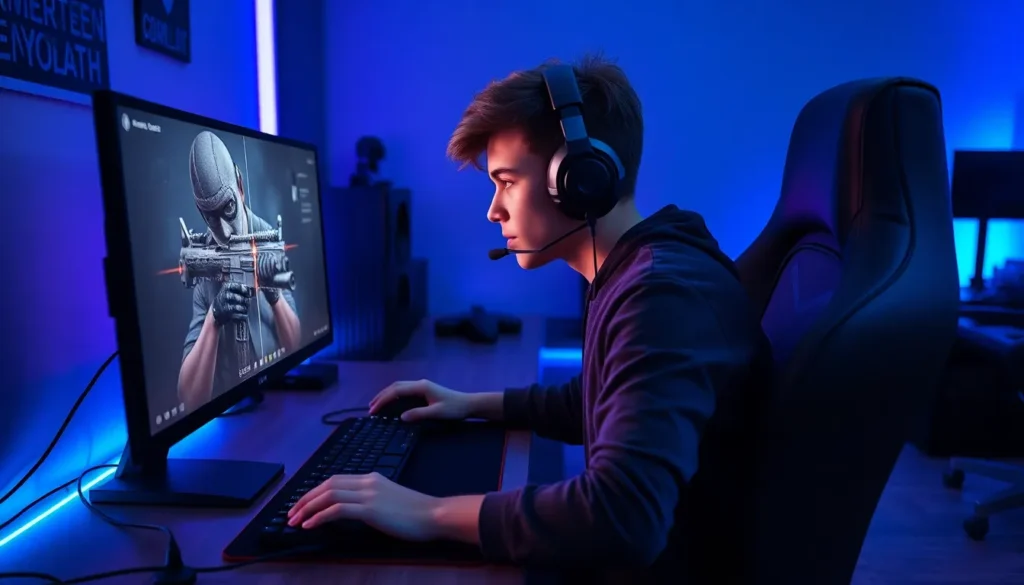
FPS tips can transform an average player into a formidable competitor. First-person shooters demand quick reflexes, sharp aim, and smart decision-making. Whether someone plays casually or competes in ranked matches, small improvements add up fast.
This guide covers the essential FPS tips that separate good players from great ones. Readers will learn how to fine-tune mouse settings, position their crosshair correctly, read maps like a pro, move with purpose, and build effective practice habits. These skills apply across popular titles like Counter-Strike, Valorant, Call of Duty, and Apex Legends.
Table of Contents
ToggleKey Takeaways
- Use low to medium mouse sensitivity (400-800 DPI) and disable mouse acceleration to build consistent aim over time.
- Keep your crosshair at head level where enemies are likely to appear—this single FPS tip dramatically improves accuracy.
- Learn map callouts, common angles, and sight lines to gain a tactical advantage before any shots are fired.
- Master movement techniques like strafing and peeking to become a harder target while maintaining accuracy.
- Practice consistently with aim trainers and review your gameplay to identify mistakes and accelerate improvement.
- Apply these FPS tips across games like Valorant, Counter-Strike, Call of Duty, and Apex Legends to see measurable results.
Master Your Mouse Settings and Sensitivity
Mouse sensitivity sits at the foundation of good aim. Many new players crank their sensitivity too high, thinking faster movement equals better performance. It doesn’t.
Most professional FPS players use low to medium sensitivity settings. A lower sensitivity allows for more precise micro-adjustments when tracking targets or lining up headshots. The sweet spot varies by individual, but a good starting point is 400-800 DPI with an in-game sensitivity that lets players do a 180-degree turn with one full swipe of their mousepad.
Here’s a quick process for finding the right sensitivity:
- Start with a lower sensitivity than feels comfortable
- Play several matches and note any overshooting or undershooting
- Make small adjustments (10-15% at a time)
- Stick with a setting for at least a week before changing again
Consistency matters more than finding the “perfect” number. Once players lock in their FPS settings, they should avoid constant tweaking. Muscle memory needs time to develop, and frequent changes reset that progress.
Mouse acceleration should be disabled in both Windows settings and the game itself. Acceleration makes cursor speed unpredictable, which hurts aim consistency over time.
Optimize Your Crosshair Placement
Crosshair placement is the single most impactful FPS tip for improving accuracy. The concept is simple: keep the crosshair at head level where enemies are likely to appear.
Too many players walk around with their crosshair pointed at the ground or at chest height. This habit forces them to flick upward before every engagement. That extra movement costs precious milliseconds, often the difference between winning and losing a gunfight.
Good crosshair placement means:
- Keeping the crosshair at head height as players move
- Pre-aiming common angles and corners
- Adjusting height based on terrain (stairs, ramps, elevated positions)
- Anticipating where enemies will peek from
Players can practice this skill by walking through maps slowly and consciously checking their crosshair position. Is it at head level? Is it aimed where an enemy could appear? These FPS tips become second nature with repetition.
Customizing crosshair appearance also helps. A small, bright crosshair with a contrasting color (cyan or green work well) improves visibility against most backgrounds. Many games offer crosshair customization in settings menus.
Learn Map Awareness and Positioning
Map knowledge separates average players from skilled ones. Knowing every angle, callout, and common position gives players a significant advantage before any shots are fired.
Effective map awareness includes:
- Learning callout names for quick team communication
- Memorizing common camping spots and off-angles
- Understanding sight lines and how to avoid exposure to multiple angles
- Tracking spawn timers for power weapons or objectives
Positioning builds on this knowledge. Smart players choose spots that offer cover, escape routes, and good sight lines. They avoid standing in the open or holding positions that expose them to multiple enemies at once.
One of the best FPS tips for positioning is the “one angle at a time” rule. Players should clear corners and angles individually rather than rushing into areas where they can be shot from several directions. This methodical approach dramatically increases survival rates.
Sound design also plays a critical role in awareness. Footsteps, gunfire, and ability sounds provide information about enemy locations. Players should invest in decent headphones and learn what different audio cues mean in their chosen game.
Develop Smart Movement Techniques
Movement in FPS games goes far beyond walking and running. Advanced movement techniques give players an edge in gunfights and make them harder targets to hit.
Strafing, moving side to side during fights, is fundamental. Standing still while shooting makes players easy targets. Instead, they should strafe left and right while firing, using counter-strafing (tapping the opposite movement key) to stop momentum for accurate shots.
Other essential movement FPS tips include:
- Peeking: Expose only a small portion of the body when checking angles
- Jiggle peeking: Quick peeks to bait shots or gather information
- Shoulder peeking: Using just the shoulder to bait sniper shots
- Bunny hopping or slide canceling: Game-specific movement tech that increases speed
Different games reward different movement styles. Apex Legends values constant motion and slide jumping. Counter-Strike punishes moving while shooting. Valorant falls somewhere in between. Players should study how movement affects accuracy in their preferred title.
Predictable movement patterns get players killed. Mixing up peek timings, varying strafe patterns, and occasionally holding unexpected angles keeps enemies guessing. The goal is to be unpredictable while maintaining solid positioning.
Practice Consistently and Review Your Gameplay
Raw talent only goes so far. Consistent, focused practice separates players who plateau from those who keep improving. These FPS tips only work when players put in the reps.
Aim trainers like Aim Lab or Kovaak’s offer structured practice for different aiming skills. Tracking, flicking, and target switching all require specific training. Even 15-20 minutes of aim training before playing warms up reflexes and builds long-term muscle memory.
In-game practice matters too. Deathmatch modes provide constant combat without the downtime of full matches. Players can focus purely on winning gunfights without worrying about objectives or round losses.
Recording and reviewing gameplay reveals mistakes that go unnoticed in the moment. Players should ask themselves:
- Why did they die in that gunfight?
- Was their crosshair placement correct?
- Did they check all angles before pushing?
- What could they have done differently?
Watching professional players and streamers also accelerates learning. Pay attention to their positioning, crosshair placement, and decision-making, not just their flashy highlight plays.
Progress in FPS games isn’t linear. Bad days happen. The key is trusting the process and staying consistent with practice routines.


