
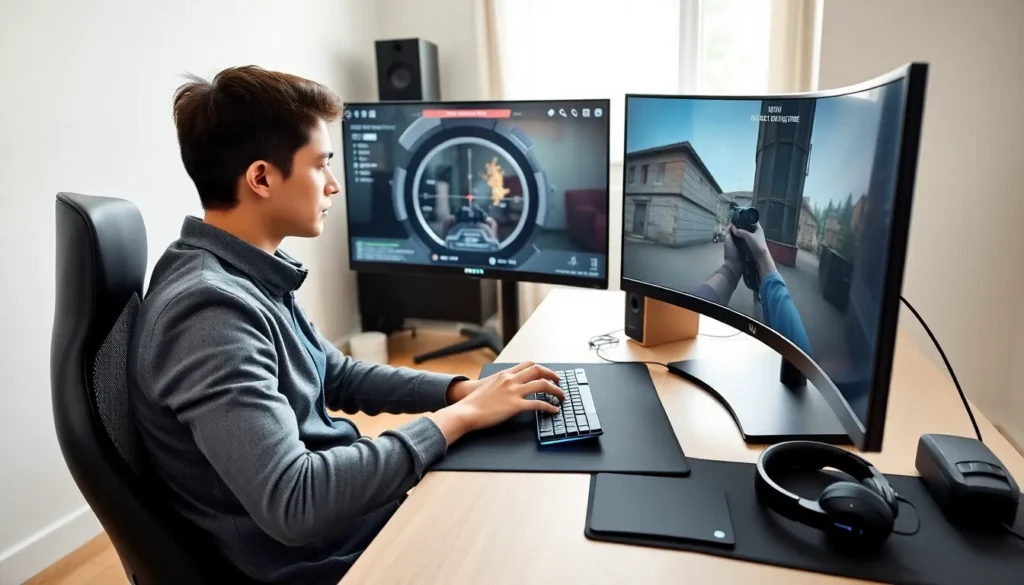
FPS for beginners can feel overwhelming at first. Players jump into matches, die repeatedly, and wonder what they’re doing wrong. The good news? Every skilled player started exactly where you are now.
First-person shooter games remain one of the most popular genres in gaming. They test reflexes, strategy, and teamwork. This guide breaks down everything new players need to know about FPS games, from basic mechanics to practical improvement tips. Whether you want to play casually with friends or climb competitive ranks, understanding these fundamentals will give you a solid foundation.
Table of Contents
ToggleKey Takeaways
- FPS for beginners becomes manageable when you focus on core skills like aiming, movement, and positioning rather than just shooting.
- Start with a lower mouse sensitivity to improve aim control, and use aim training tools for 15 minutes daily to build muscle memory.
- Choose one beginner-friendly FPS game—like Valorant, Overwatch 2, or Halo Infinite—and stick with it to develop skills faster.
- Always keep your crosshair at head level where enemies appear to reduce reaction time during encounters.
- Review your deaths after each match to identify patterns and weaknesses you can actively improve.
- Optimize your gaming setup with stable frame rates, a reliable gaming mouse, and a large mousepad for better performance.
What Is an FPS Game?
An FPS game puts players directly behind the eyes of their character. The camera shows what the character sees, with weapons and hands visible on screen. This perspective creates an immersive experience that other game types can’t match.
FPS games have been around since the early 1990s. Titles like Doom and Quake established the genre’s core mechanics. Today, FPS games range from fast-paced arena shooters to tactical military simulations.
The defining feature of any FPS is combat. Players use firearms, explosives, and sometimes melee weapons to defeat opponents. Some FPS games focus on single-player campaigns with story-driven missions. Others emphasize multiplayer modes where real players compete against each other.
Popular FPS subgenres include:
- Battle Royale: Large maps where players scavenge for weapons and fight until one remains
- Team Deathmatch: Two teams compete to reach a kill count first
- Tactical Shooters: Slower-paced games emphasizing strategy and coordination
- Hero Shooters: Characters have unique abilities alongside standard weapons
Understanding which FPS subgenre appeals to you helps narrow down game choices. A player who enjoys methodical planning might prefer tactical shooters over fast-paced arena games.
Essential Skills Every FPS Beginner Should Learn
Success in FPS games depends on mastering a few core skills. New players often focus only on shooting, but movement and positioning matter just as much.
Aiming and Mouse Sensitivity
Aiming separates good FPS players from great ones. Consistent aim requires proper sensitivity settings and regular practice.
Mouse sensitivity controls how fast the crosshair moves when you move your mouse. Many beginners set sensitivity too high, causing them to overshoot targets. A lower sensitivity gives more control, though it requires more desk space for mouse movement.
Start with a sensitivity that lets you do a 180-degree turn with one comfortable swipe across your mousepad. From there, adjust based on personal preference. Most professional FPS players use relatively low sensitivity settings.
Aim training tools help build muscle memory. Programs like Aim Lab or Kovaak’s offer free exercises that improve tracking and flick shots. Even 15 minutes of daily practice produces noticeable results within weeks.
Crosshair placement is another critical habit. Keep your crosshair at head level where enemies will appear. This reduces the distance you need to move your aim when an opponent shows up.
Movement and Positioning
Good movement keeps players alive longer. Standing still makes you an easy target. Moving unpredictably while shooting gives opponents a harder time landing hits.
Strafing, moving side to side, is fundamental FPS movement. Combine strafing with jumping and crouching to become difficult to hit. Each FPS game has specific movement mechanics worth learning, like slide-canceling or bunny hopping.
Positioning refers to where you place yourself on the map. Strong positions offer cover, sight lines on enemy approaches, and escape routes. Weak positions leave you exposed from multiple angles.
Learn common map callouts and high-traffic areas. Knowing where enemies typically move helps you anticipate fights rather than react to them. Watch how experienced players position themselves during matches.
Best FPS Games for Beginners
Some FPS games welcome new players better than others. These titles offer good learning environments without steep skill curves.
Valorant combines tactical shooting with hero abilities. The game has a structured competitive system that matches players with similar skill levels. Its slower pace gives beginners time to think rather than purely relying on reflexes.
Call of Duty: Warzone provides a free battle royale experience. The game forgives mistakes better than other battle royales because of its respawn mechanics. Casual modes let new players practice without intense pressure.
Overwatch 2 features diverse heroes with different difficulty levels. Support and tank roles let beginners contribute to teams while learning FPS basics. The game also went free-to-play, removing the entry cost barrier.
Counter-Strike 2 remains the gold standard for competitive FPS gaming. While the skill ceiling is high, the game teaches fundamental shooting mechanics that transfer to other FPS titles. Deathmatch modes offer low-stakes practice.
Halo Infinite delivers classic arena FPS gameplay. Longer time-to-kill means positioning and teamwork matter more than pure aim speed. The free multiplayer mode makes it accessible to everyone.
Beginners should pick one FPS game and stick with it. Jumping between multiple games slows skill development because each title has unique mechanics and feel.
Tips to Improve Your FPS Gameplay
Improvement in FPS games comes from deliberate practice and smart habits. Here are practical ways to get better faster.
Review your deaths. After dying, think about what went wrong. Did you miss shots? Take a bad fight? Get flanked? Identifying patterns in your deaths reveals weaknesses to address.
Play with purpose. Mindless grinding produces slower improvement than focused practice. Set specific goals for each session, like landing more headshots or checking corners consistently.
Watch better players. Streams and YouTube videos show how skilled players approach the game. Pay attention to their positioning, decision-making, and communication rather than just flashy highlights.
Optimize your setup. A stable frame rate matters more than maximum graphics quality. Lower visual settings if needed to maintain smooth performance. Many competitive FPS players run games at lower settings intentionally.
Use a good mouse and mousepad. A gaming mouse with a reliable sensor improves aim consistency. A large mousepad gives room for low-sensitivity movements. These upgrades cost less than other gaming peripherals but impact performance significantly.
Take breaks. Fatigue hurts reaction time and decision-making. After losing several games in a row, step away for a bit. Coming back fresh often produces better results than pushing through tilt.
Find teammates. FPS games become more enjoyable and educational with regular squadmates. Communication improves gameplay, and teammates can offer feedback on mistakes you might not notice yourself.


