
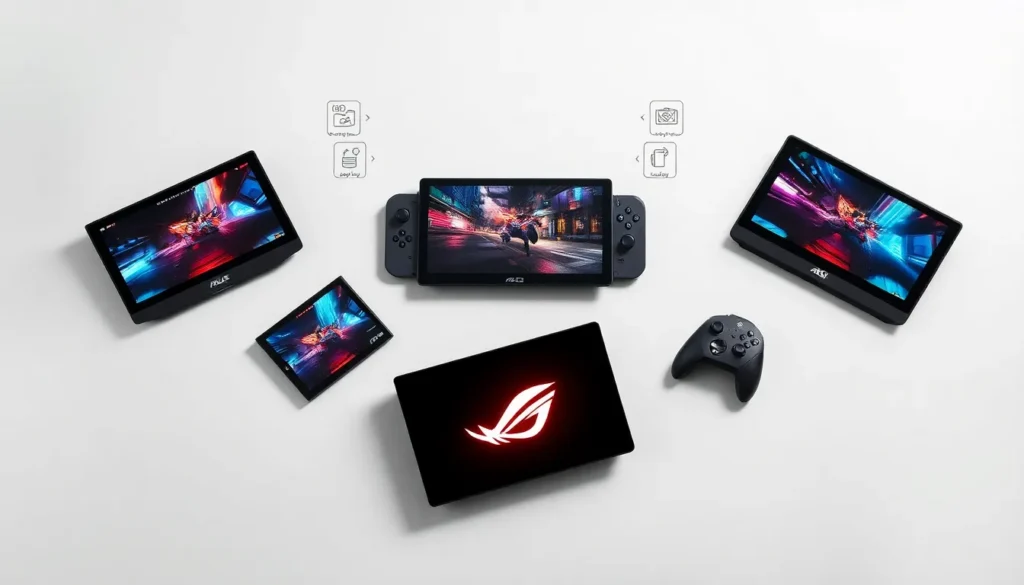
The Asus ROG Ally vs. other handheld gaming PCs is one of the hottest debates in portable gaming right now. Since its 2023 launch, the ROG Ally has carved out a significant spot in a market once dominated by the Steam Deck. But how does it actually compare to its main rivals?
This article breaks down the Asus ROG Ally vs. the Steam Deck, Lenovo Legion Go, and MSI Claw. Each device brings something different to the table, whether it’s raw power, display quality, battery life, or price. By the end, readers will have a clear picture of which handheld gaming PC fits their needs best.
Table of Contents
ToggleKey Takeaways
- The Asus ROG Ally vs. Steam Deck comparison favors the Ally for performance and display quality, while the Steam Deck wins on price and a smoother console-like OS experience.
- The ROG Ally’s AMD Z1 Extreme chip delivers 15-25% higher frame rates than the Steam Deck in demanding AAA games like Cyberpunk 2077 and Starfield.
- In the Asus ROG Ally vs. Lenovo Legion Go matchup, the Legion Go offers a larger 8.8-inch display and detachable controllers, but the Ally is 246 grams lighter and $100 cheaper.
- The MSI Claw’s Intel processor trails behind the ROG Ally’s AMD chip in gaming benchmarks, making the Ally the better value at $599 vs. $699.
- The ROG Ally stands out as the most balanced handheld gaming PC for most users, offering solid performance, a sharp 1080p 120Hz display, and competitive pricing.
ROG Ally Vs. Steam Deck
The Asus ROG Ally vs. Steam Deck comparison is arguably the most important one to consider. Valve’s Steam Deck launched first and built a loyal following. The ROG Ally arrived later with some serious hardware upgrades.
Performance
The ROG Ally runs on AMD’s Z1 Extreme chip, which outperforms the Steam Deck’s custom AMD APU in most benchmarks. Games like Cyberpunk 2077 and Starfield run smoother on the Ally, often hitting 15-25% higher frame rates at comparable settings. The Steam Deck still handles most titles well, but demanding AAA games push it harder.
Display
Here’s where the ROG Ally pulls ahead significantly. It features a 7-inch 1080p IPS display running at 120Hz. The Steam Deck uses a 7-inch 800p LCD at 60Hz. That difference is noticeable immediately, games look sharper and feel more responsive on the Ally.
Operating System
The Steam Deck runs SteamOS, a Linux-based system optimized for gaming. The ROG Ally uses Windows 11. This gives the Ally access to Game Pass, Epic Games Store, and virtually any PC game without compatibility layers. But, Windows can feel clunky on a handheld, and SteamOS offers a more console-like experience.
Battery Life
Neither device wins here. Both deliver roughly 1.5-2 hours on demanding games and 4-6 hours on lighter titles. The Ally’s superior hardware draws more power, so even though having a slightly larger battery, it doesn’t outlast the Steam Deck.
Price
The base Steam Deck starts at $399 (64GB LCD model), while the ROG Ally begins at $599. That $200 gap matters for budget-conscious buyers. The Steam Deck OLED model closes this gap at $549, adding a stunning display that rivals the Ally’s visual appeal.
ROG Ally Vs. Lenovo Legion Go
The Asus ROG Ally vs. Lenovo Legion Go comparison pits two Windows handhelds against each other. Both target gamers who want maximum flexibility and raw power.
Screen Size and Features
The Legion Go sports an 8.8-inch display at 2560×1600 resolution with a 144Hz refresh rate. It’s the biggest and sharpest screen among mainstream handhelds. The ROG Ally’s 7-inch 1080p 120Hz screen looks modest by comparison. For pure visual impact, the Legion Go wins this round.
Performance
Both devices use the AMD Z1 Extreme processor. Real-world performance is nearly identical. The Legion Go pushes more pixels due to its higher resolution, which can reduce frame rates slightly in demanding games unless users drop to 1080p.
Controllers
The Legion Go’s detachable controllers set it apart. They pop off like Nintendo Switch Joy-Cons, and one controller converts into a mouse-like FPS mode. The ROG Ally’s integrated controls feel solid but can’t match this versatility.
Size and Portability
The Legion Go weighs 854 grams with controllers attached. The ROG Ally comes in at 608 grams. That difference is significant during extended sessions. The Ally fits in smaller bags and feels more comfortable for handheld play.
Price
The Legion Go retails at $699, making it $100 more expensive than the ROG Ally. Buyers pay extra for the larger screen and detachable controllers. Whether that premium is worth it depends on individual priorities.
ROG Ally Vs. MSI Claw
The Asus ROG Ally vs. MSI Claw matchup is interesting because the Claw takes a different hardware approach.
Processor Choice
The MSI Claw uses Intel’s Core Ultra 7 155H processor instead of AMD’s Z1 Extreme. Early benchmarks showed the Claw trailing behind the ROG Ally in gaming performance. Intel’s Arc graphics haven’t matched AMD’s RDNA 3 architecture in this form factor. MSI has released driver updates that improved performance, but the Ally still holds an edge in most tests.
Build Quality
Both devices feel premium. The Claw has a slightly different ergonomic shape that some users prefer. The ROG Ally’s design has received more praise overall, though this comes down to personal preference.
Display
The MSI Claw matches the ROG Ally with a 7-inch 1080p 120Hz display. Visual quality is comparable between both devices.
Software Experience
Both run Windows 11. MSI’s Center M software manages the Claw, while ASUS uses Armoury Crate SE. Neither interface is perfect, but Armoury Crate SE has received more updates and refinements since launch.
Price
The MSI Claw launched at $699 for the base model, putting it above the ROG Ally’s $599 starting price. Given the performance difference, the Ally offers better value for most buyers.
Which Handheld Gaming PC Should You Choose?
Choosing between the Asus ROG Ally vs. its competitors depends on what matters most to each buyer.
Choose the Steam Deck if: Budget is the top priority, or the buyer prefers a console-like operating system. The Steam Deck OLED model offers excellent value at $549 with a beautiful display.
Choose the ROG Ally if: Windows compatibility and a balance of performance, display quality, and portability matter most. It hits a sweet spot between power and price.
Choose the Legion Go if: Screen size is paramount, or the buyer wants detachable controllers for desktop use. It’s the most versatile option but also the heaviest.
Choose the MSI Claw if: The buyer specifically prefers Intel hardware or finds a significant discount. At full price, it’s harder to recommend over the ROG Ally.
The Asus ROG Ally vs. the competition shows that no single device wins every category. Each handheld makes trade-offs. The Ally stands out as the most balanced option for most users, solid performance, great display, reasonable weight, and competitive pricing.


